
Many startups struggle to scale because they hire AI engineers without a clear strategy. Poor hiring decisions result in weak models, slow product development, rising costs, and loss of user trust. A skilled AI engineer builds scalable systems, transforms data into business value, and supports long-term growth. This startup guide explains how to hire AI engineers effectively, covering essential skills, hiring steps, costs, and common mistakes to avoid.
What is an AI Engineer and Why Your Business Needs One
An AI Engineer is a professional who designs and builds systems that learn from data, creating models that predict results and automate decisions. Their work turns raw data into actionable insights.
What does an AI engineer do?
- Builds machine learning models
- Train systems using real data
- Deploys AI features into products
- Improves model accuracy over time
Why your business needs an AI engineer
- Manual processes do not scale
- Data alone has no value without AI
- AI improves speed, accuracy, and decisions
Rapid Growth in AI Talent Demand
The AI engineering market is expanding rapidly. Over the past two years, job listings for AI roles have surged by 130%, reflecting the urgent need for skilled AI professionals.
“The most valuable skills in the AI age won’t be technical; they’ll be human.” – Geoff Colvin
Early-stage generative AI startups, backed by considerable investments, are driving even higher demand for engineers who can build innovative and scalable AI solutions.
Why Hiring the Right AI Engineer Matters for Startups
For startups, technology decisions can make or break success. Hiring the right AI engineer is one of the most critical choices a founder can make. A skilled AI engineer does more than write code; they design, build, and deploy intelligent systems that learn from data, automate key processes, and provide actionable insights. These engineers ensure your AI models are accurate, efficient, and aligned with your business goals, helping your startup move faster and make better decisions.
“The impact of hiring the wrong AI talent can be severe. Poorly designed models waste time and money, slow down product launches, and produce unreliable results that erode user trust. In startups, where resources are limited, even small inefficiencies can have major consequences, delaying growth and reducing competitive advantage.“
By hiring the right AI engineer, startups gain a strategic partner who not only solves technical challenges but also helps shape product strategy, optimize processes, and create scalable solutions. This hire directly affects speed to market, cost efficiency, user satisfaction, and the long-term viability of AI-driven initiatives, giving the startup a strong competitive edge.
1. Programming and Technical Skills
AI engineers must be highly proficient in Python, the primary language for AI and machine learning. Knowledge of additional languages like R, Java, or C++ is valuable for specific tasks or performance-critical applications. Engineers should also be comfortable with AI frameworks like TensorFlow, PyTorch, and Scikit-learn, and understand version control tools like Git for collaborative projects. Strong programming ensures models are implemented efficiently, scalable, and maintainable.
2. Machine Learning and Deep Learning Expertise
AI engineers must be highly proficient in Python, the primary language for AI and machine learning. Knowledge of additional languages like R, Java, or C++ is valuable for specific tasks or performance-critical applications. Engineers should also be comfortable with AI frameworks like TensorFlow, PyTorch, and Scikit-learn, and understand version control tools like Git for collaborative projects. Strong programming ensures models are implemented efficiently, scalable, and maintainable.
3. Data Handling and Preprocessing
AI engineers must be highly proficient in Python, the primary language for AI and machine learning. Knowledge of additional languages like R, Java, or C++ is valuable for specific tasks or performance-critical applications. Engineers should also be comfortable with AI frameworks like TensorFlow, PyTorch, and Scikit-learn, and understand version control tools like Git for collaborative projects. Strong programming ensures models are implemented efficiently, scalable, and maintainable.
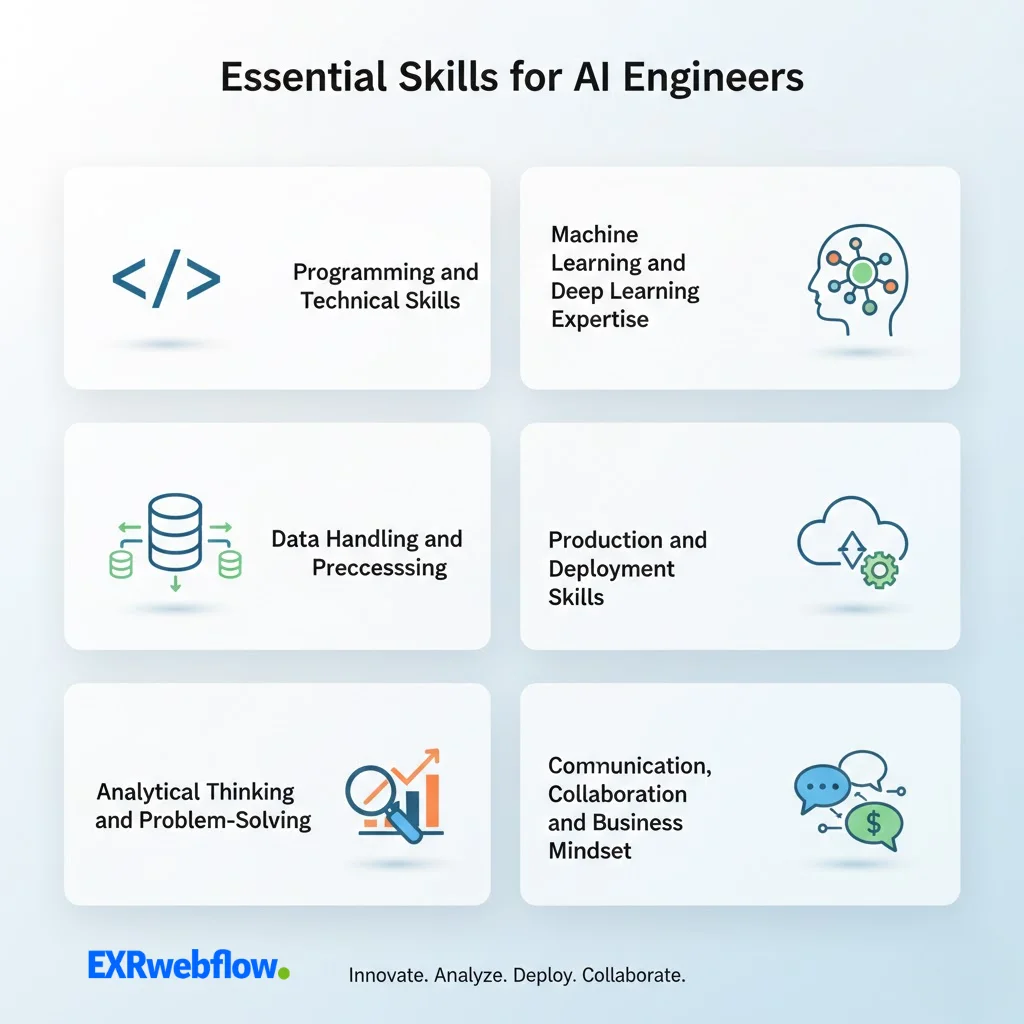
4. Production and Deployment Skills
Building models is not enough; engineers must deploy AI solutions into production environments. This involves using cloud platforms (AWS, GCP, Azure), integrating models into applications via APIs or microservices, and monitoring model performance over time. Engineers must ensure models remain accurate and efficient as data evolves, enabling businesses to gain ongoing value from AI systems.
5. Analytical Thinking and Problem-Solving
A top AI engineer can translate complex business problems into actionable AI solutions. They break down challenges, identify patterns in data, and interpret model outputs to guide decision-making. Strong analytical thinking ensures that AI solutions are not only technically sound but also aligned with business goals.
6. Communication, Collaboration and Business Mindset
Soft skills are critical in startups. Engineers should communicate complex AI concepts in simple terms to non-technical stakeholders, collaborate effectively with cross-functional teams, and adapt to fast-changing requirements. A product-focused mindset ensures AI models solve real problems, create measurable impact, and align with overall business objectives.
How to Hire AI Engineers: Step-by-Step Process
Hire the right AI engineer by first defining your project needs and role requirements. Here’s a step-by-step process to guide you:
1. Define AI Needs and Role Requirements
Before posting a job, clearly define what your startup needs from an AI engineer. Identify the AI problems your product must solve:
- Building predictive models
- Automating processes
- Creating recommendation systems
Outline responsibilities, including model development, data preprocessing, and deployment to production. Specify the experience level and technical skills (Python, machine learning frameworks, cloud deployment). Clear definitions attract the right candidates and prevent misaligned hires.
2. Where to Find AI Engineers for Hire
Targeted sourcing ensures you reach qualified candidates. Top sources include:
- Kaggle and GitHub: Showcases portfolios and real project experience
- Active AI communities and conferences: Engineers often showcase their work
- University labs and research programs: Ideal for fresh talent with strong technical foundations
3. How to Evaluate and Interview Candidates
Effective evaluation goes beyond theory. Use practical assessments that mirror real startup challenges:
- Coding challenges: Test programming and algorithm skills
- Model evaluation tasks: Measure data handling and predictive capabilities
- System design exercises: Assess architecture understanding
Also evaluate soft skills: problem-solving, creativity, communication, and alignment with startup culture. Flexibility and collaboration are essential for small, fast-moving teams.
4. Making the Offer and Closing the Hire
High-quality AI engineers are in demand. Move quickly once you find the right candidate. Ensure your offer includes:
- Clear responsibilities and role scope
- Emphasis on startup vision and impact
- Growth opportunities and access to real datasets
- Competitive compensation and benefits
A structured onboarding plan and clear expectations increase acceptance rates and long-term retention.
Building a Competitive Edge with the Right AI Engineers
Hiring the right AI engineers is a strategic decision for startups. Skilled AI engineers transform data into actionable insights, automate critical processes, and develop intelligent products that give your business a strong competitive advantage. A poor hire, however, can delay projects, increase costs, and compromise product quality.
Start Your AI Journey with our AI Engineers.
Focus on candidates with the right combination of technical expertise, problem-solving skills, and cultural fit to drive innovation, efficiency, and sustainable growth.
Frequently Asked Questions to Hire AI Engineers
What are the common mistakes startups make when hiring AI engineers?
Startups often overemphasize technical depth while overlooking adaptability, problem-solving ability, and cultural fit. This can lead to hiring engineers who struggle in fast-paced, ambiguous startup environments.
What skills should a startup look for when hiring an AI engineer?
Startups should prioritize strong fundamentals in machine learning, data handling, and programming, along with practical experience in building and deploying scalable AI models and the ability to collaborate across teams.
How much does it cost to hire an AI engineer at a startup?
Costs vary by experience and location. Mid-level AI engineers typically earn $120,000 – $200,000 annually, often with equity, while senior engineers with specialized expertise may command $200,000 or more.
How long does it take to hire an AI engineer?
The hiring process usually takes 6–12 weeks, including sourcing, interviews, and offer negotiations, which may extend due to strong market competition.