
Are you experiencing problems with locating all your products in your warehouse?
Stocking errors, deliveries that are tardy and vague supply chains will actually drag the process down and chew into profits.
The conventional Warehouse Management Systems (WMS) and central databases in many cases, simply fail to provide you with the real-time visibility or even the loose collaboration that you require.
It is in that place that Blockchain Technology of Warehouse and Supply Chain comes in.
It has integrated smart contracts and distributed ledgers, IoT warehousing, and ERP to ensure your system is secure, reliable, and completely auditable.
Inventory, shipments and stock reconciliation are suddenly easy, accurate and stress-free.
What is Blockchain Technology?
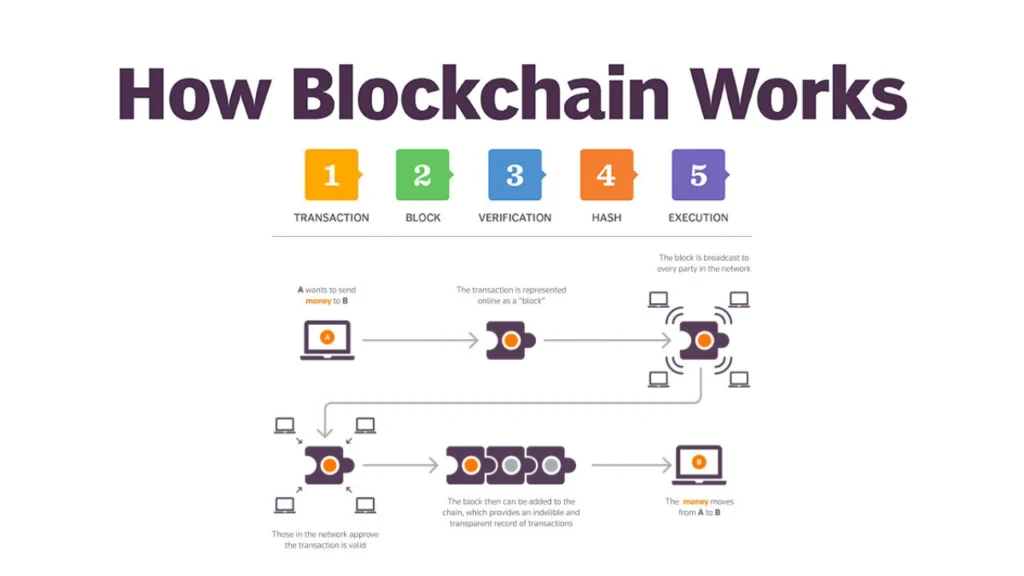
Blockchain is a type of distributed ledger technology (DLT), a technology that allows two or more parties to store, share, and verify data on a decentralized network without the need for a central authority.
Compared to the traditional centralized databases, blockchain is not only tamper-proof but also highly resilient because, in the case of blockchain, the data is managed by a single entity and is distributed among a chain of nodes.
After the information is stored on the blockchain, it becomes unchangeable, i.e., it cannot be changed or erased without the network participants’ agreement.
This guarantees data integrity, which is very important in supply chains and warehouse management, where the importance of accurate tracking of inventory, shipments, and ownership is a key requirement.
Blockchain Technology has important characteristics:
Transparency
Everything recorded in a blockchain can be viewed by all the people and can be accessed by anyone who has the right to access it.
It would mean that it is possible to audit on-command the movement of inventory, shipping data, and ownership in a warehouse or a supply chain setting and reduce the number of conflicts and increase the trustworthiness of stakeholders.
Security
Blockchain is associated with cryptography, hashing, digital signatures, and consensus in order to secure data. The former is a hash of the earlier block and, therefore, an extremely difficult chain to interfere with.
This will enable one to protect sensitive logistics information, including supplier information, inventory, or shipment information, without being stolen by fraudsters or hackers.
Smart Contracts
Smart contracts are computer programs that are self-executable and are stored on the blockchain, where they automatically execute business rules in case of predetermined conditions.
Smart contracts may be used in inventory reconciliation, trigger replenishment orders, service-level agreements (SLAs), and release payments upon delivery confirmation to significantly less manual intervention and operational errors in warehouse management.
Build Smarter, Launch Faster, Connect with EXRWebflow Today
Role of Blockchain in Warehouse Management
- Real-Time Inventory Monitoring: Understand what is in stock, where, and when exactly it travels- Privy to a live map of each item.
- Improved Data Accuracy: The transactions are stored securely and cannot be corrupted, eliminating mistakes and ensuring that the records that do not match.
- Automation of Smart Contracts: Boring activities like refill orders or delivery messages are automatically completed, which proves to be time-saving and reduces mistakes.
- Reduced paperwork and Human error: Welcome to no forms and spreadsheets. Everything is made digital, verifiable, and smooth by blockchain.
Role of Blockchain in Supply Chain Management
- End-to-End Visibility: The products are visible end-to-end through the supplier to the customer in real-time, and everybody has a clear understanding of the entire supply chain.
- Enhanced Traceability: The origin, transfer and ownership of goods are easily monitored, and this makes them genuine and of good quality.
- Fraud Prevention and Security: Records that cannot be changed and cryptographic security reduce the risk of manipulation, counterfeited products and disputes.
- Quick Payments and Settlement: The Smart contracts can fully automate invoicing and release payment; this aspect accelerates the transactions and minimises delays.
Key Benefits of Blockchain in Warehouse and Supply Chain
Increased Transparency
Blockchain is a common, unchangeable record in which the stakeholders, including the suppliers, warehouse managers, transporters, and customers, have access to authenticated data on the movement of inventory and shipments, transactions, etc.
This end-to-end visibility minimises arguments, builds trust, and gives the option of tracking the stock levels of various warehouses in real-time. Businesses may be able to make more informed decisions faster by eradicating data silos and enhancing the digitisation of the supply chain.
Better Operational Performance
Regular processes such as inventory reconciliation, order handling, and shipment confirmation are automated with the use of smart contract automation and connection to Warehouse Management Systems (WMS) and ERP platforms, as well as IoT devices.
This minimises manual error, improves workflow, and provides correct and real-time synchronisation of data in all the logistics partners. The paper-based operations or fragmented databases create operational bottlenecks that are reduced and enhance overall supply chain operations.
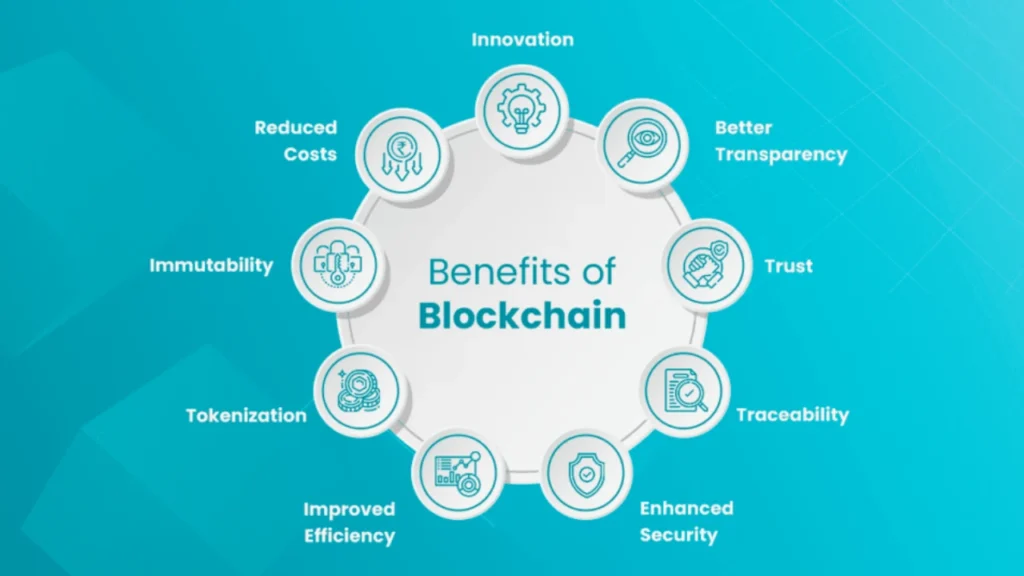
Cost Reduction
Blockchain assists in reducing costs through reconciliation, inventory errors, fraud, and simplifying reverse logistics operations. Smart contracts are automated processes that exclude the need to perform any form of unnecessary manual intervention and minimise the use of third-party intermediaries.
The secure and real-time data exchange, coupled with the automation of the processes, will bring about major savings to the operations of the warehouses and supply chain networks over time.
Improved Compliance and Auditing
All operations within a blockchain are permanent and time-stamped to provide an audit record that facilitates regulatory reporting and compliance. Pharmaceuticals, food and beverage, and manufacturing industries require a high level of traceability and, therefore, the provenance of their products and the safety of documentation.
Data safety is also improved by blockchain, which offers cryptographically secured records that minimise the possibility of interference or unlawful access when conducting an audit.
Grow at a faster rate using Intelligent Software Solutions crafted to automate processes, improve accuracy, and lead to concrete growth.
Real-World Examples of Blockchain in Supply Chain
Walmart – Food Traceability: Walmart has introduced blockchain to track the location of food products that are found in the farms to the shelves. Distributed ledger technology, as well as IoT-enabling tracking, can also enable the company to offer end-to-end visibility, improve traceability, and reduce the risk of having spoiled or fake food passing through the supply chain.
IBM – Blockchain Supply Chain Solutions: IBM blockchain solutions in enterprise (e.g. Hyperledger Fabric) offer the business community the opportunity to establish safe, auditable, and transparent supply chains. IBM assists businesses in automating operations, improving the efficiency of operations, and being regulatory through integrating with Warehouse Management Systems (WMS) and ERP systems.
Maersk – Digitisation Shipping Logistics: Maersk, in cooperation with IBM, has introduced the use of blockchain to digitalise shipping logistics, such as documentation, customs clearance, and cargo tracking. The system minimises paperwork, fraud, and hastens settlements by automating smart contracts and providing a secure and tamper-proof ledger of shipping operations worldwide.
Challenges of Implementing Blockchain
- Adopting blockchain may be costly because of the cost of setup costs and infrastructure requirements.
- The process of integrating blockchain and traditional databases, warehouses, and ERP systems can be complicated and time-consuming.
- A large number of transactions processed within a short time can overload the network if the network is not scalable.
- Adoption may be cumbersome due to ensuring that the data protection laws and the industry regulations are adhered to.
Take control of your supply chain with blockchain, track every product, secure every transaction, and make life easier for your team.
Key Takeways
- Blockchain is a secure and transparent system that is resistant to tampering and allows tracking activities within the inventory and supply chain.
- Tracking in real-time, automation of smart contracts, and records that cannot be changed enhance efficiency in operations and minimise errors that can be met manually.
- The integration with IoT, AI, WMS, and ERP systems will increase the accuracy of data, predictive decision-making, and the digitisation of the entire supply chain.
- The benefits of businesses using blockchain include a competitive advantage by reducing costs, increasing settlement speed, preventing fraud, and enhancing compliance.
- Blockchain can be considered an effective strategic tool of the contemporary warehouse and supply chain management due to the future towards broader adoption, cross-border logistics integration, and supply networks tokenisation.
Frequently Asked Questions
What is warehouse management and supply chain blockchain technology?
The application of distributed ledger systems to record, distribute, and verify warehouse and supply chain data among more than two stakeholders is known as blockchain technology. It guarantees clarity, precision, and non-numerical monitoring of stock and deliveries.
Why are blockchain and transparency of the warehouse better?
With an unchanging, communal account of inventory movements and transactions, blockchain offers real-time visibility, minimizes conflicts, and allows all parties to have access to validated information.
Is blockchain a potential substitute for warehouse management systems (WMS)?
No. Blockchain is not a substitute but an addition to the available WMS platforms, through which a safe, reliable, synchronised data verification layer is offered.
Can blockchain be used in large warehouses?
Yes. Blockchain is capable of managing the high-volume warehouse operations using permissioned networks, storage off-chain, and optimised consensus mechanisms.
Which industries are the most beneficial to blockchain-based warehousing?
Pharmaceuticals, food and beverage, manufacturing, retail, and logistics industries are those that benefit the most from blockchain integration through their need to have traceability and comply with regulations.
Which abilities should developers have in order to introduce blockchain in supply chains?
The developers are required to possess knowledge and skills in distributed systems, smart contract development, integration of APIs, security protocols, as well as a good understanding of how the warehouses and the supply chain work.