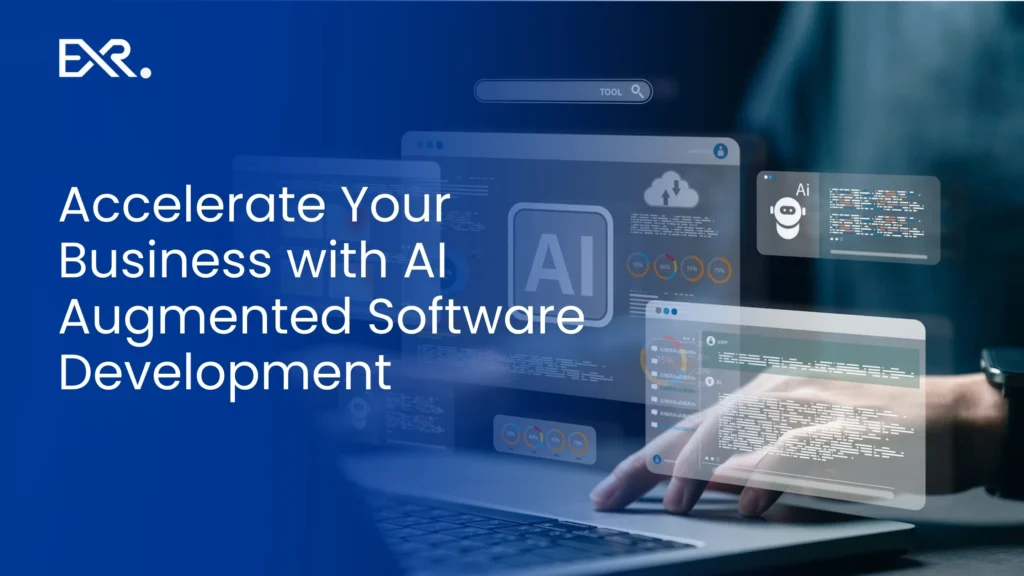

Slow development cycles and recurring errors delay software delivery.
Costs increase, valuable resources get wasted and innovation slows, leaving your business exposed to faster competitors.
AI-augmented software development transforms how teams work by automating routine tasks, minimizing errors and speeding up delivery, so growth becomes scalable, not stressful.
How can AI-augmented software development help grow your business?
It helps by automating routine tasks, improving code quality, streamlining workflows, speeding up project delivery and making your software smarter and more scalable.
What is AI-Augmented Software Development?
AI-Augmented Software Development is a method that uses artificial intelligence to enhance the software development process, making it smarter and faster. AI tools assist developers by automating repetitive tasks, suggesting or generating code, identifying and fixing errors and even predicting potential problems before they occur. This allows teams to focus on more important aspects of their work, such as designing features, solving complex challenges, and innovating. By combining human skills with AI, businesses can develop software more quickly, reduce errors, improve quality, and scale projects efficiently.
Why It Matters for Modern Businesses
In today’s digital economy, speed, accuracy, and scalability are critical to staying competitive. Businesses are expected to launch software faster than ever without compromising on quality or security. However, traditional development approaches often struggle to keep up with rising customer expectations, growing system complexity, and intense market competition.
This is where AI-augmented software development makes a real difference. By embedding AI tools into development workflows, companies are seeing tangible results. On average, AI adoption has helped teams increase deployment speed by around 24% while cutting development costs by 25-40% through the automation of repetitive tasks and testing processes.
Businesses that use AI-driven code reviews and automated testing see a 22%reduction in post-release defects and detect bugs 40% faster than with traditional methods. This leads to more reliable software, smoother releases and better results without increasing operational workload.
The Rise of AI-Augmented Development
AI-augmented development is not about replacing developers. It is about enhancing human expertise with intelligent tools. Technologies such as machine learning, code generation, automated testing and predictive analytics are now embedded into modern development environments.
This shift has accelerated due to:
- Increasing software complexity
- Shorter product life cycles
- Demand for continuous delivery
- Shortage of skilled developers
Breaking Bottlenecks: How AI Transforms Development into Business Success
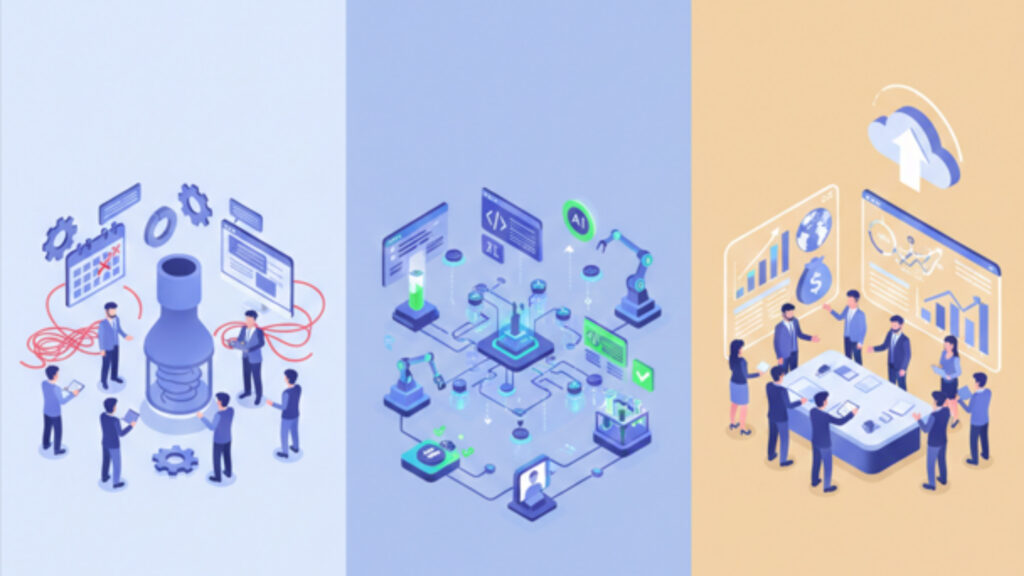
In today’s fast-paced digital economy, businesses cannot afford delays in software development. Traditional processes often hit bottlenecks, slow coding cycles, repetitive testing, delayed approvals and human errors. These challenges not only slow delivery but also impact business outcomes, increasing costs and reducing customer satisfaction.
AI-augmented software development addresses these issues by automating repetitive tasks, predicting errors, and streamlining workflows, turning development into a strategic growth engine.
Related: Explore how AI can transform your projects
Boosting Productivity with AI Tools
Boosting productivity with AI tools refers to using artificial intelligence technologies to automate repetitive tasks, optimize workflows and support decision-making in software development and business operations.
AI in Coding and Implementation:
AI in coding acts as a virtual assistant that helps developers write, review and optimize code in real time. It provides intelligent suggestions, auto-completes repetitive code, detects potential errors early and improves overall coding efficiency. This allows developers to implement features faster, maintain high-quality standards and reduce manual effort.
AI in Testing and QA:
AI-powered testing tools automate quality assurance processes by detecting bugs, predicting potential failures, and running tests across multiple scenarios simultaneously. This accelerates testing cycles, improves accuracy, and ensures software reliability, enabling faster and more confident releases.
AI in DevOps and Maintenance:
AI in DevOps monitors infrastructure, predicts system failures, automates deployments, and optimizes maintenance schedules. By proactively managing operations and reducing downtime, AI helps businesses maintain stable systems, streamline updates, and scale software efficiently while minimizing operational risks.
AI-Augmented Software Development
Modern software development is no longer linear. To stay competitive, businesses must continuously ideate, build, and run their products in an iterative loop. By leveraging AI and automation, teams can accelerate delivery, improve quality and create products that truly meet user needs.
1. IDEATE
The IDEATE phase focuses on discovering opportunities and validating ideas before heavy development begins. AI and data analytics help teams uncover insights from user behavior, enabling smarter decision-making.
2. BUILD
The BUILD phase transforms validated ideas into reliable, tested software. AI tools enhance development speed, code quality, and testing efficiency.
3. RUN
The RUN phase ensures software is stable, efficient, and continuously improving.
Context Engineering: Evolution of AI in Software Development
Context engineering is all about giving AI the right background and information so it can work smarter and more effectively. Over the years, it has grown from simple automation to tools that can suggest code, predict issues and even help manage projects proactively, making software development faster and smoother.
Prompt vs. Context Engineering
Prompt engineering is about how we talk to an AI. It focuses on choosing the right words, tone, and structure when giving instructions so the system clearly understands what is being asked. Simple, well-phrased prompts help the AI respond accurately, while unclear or vague wording can lead to weak results. In short, it is about communicating your intent in the clearest and most effective way.
Context engineering is about what the AI knows before it answers. It involves giving background details, relevant information, examples, or constraints so the AI can better understand the situation. With proper context, the AI can respond in a more meaningful, relevant, and realistic way because it has a fuller picture of the task.
The main difference lies in purpose: prompt engineering shapes the question, while context engineering shapes understanding. When used together, they create stronger outcomes, as clear instructions combined with rich background information allow the AI to deliver more natural, accurate, and useful responses.
AI Augmented Project Management
AI Augmented project management combines artificial intelligence with traditional project management to support project managers, not replace them. Instead of relying on manual and reactive methods, AI Augmented Project Management enables a proactive, data-driven approach. This allows project managers to spend less time on routine work and more time on strategic leadership, decision-making and solving complex problems.
- Predictive Insights: AI reviews past project data to identify potential risks, delays, or budget issues in advance, helping teams take preventive action early.
- Automation of Routine Tasks: Repetitive activities such as scheduling updates, report creation, and data entry are automated, saving time and reducing errors.
- Better Decision-Making: Real-time insights and scenario analysis support faster and more accurate managerial decisions.
- Efficient Resource Use: AI helps assign the right people to the right tasks, predicts future resource needs, and balances workloads to improve productivity and reduce burnout.
- Stronger Communication: AI assists in drafting messages, summarizing meetings and sending intelligent notifications, improving coordination among stakeholders.
Want to speed up your next software project? Let’s talk book your free consultation today!
Schedule Your Free Consultation
Conclusion
AI-augmented project management enables teams to work smarter, not harder. By combining human expertise with intelligent automation, it transforms project management into a proactive, data-driven discipline that improves efficiency, accuracy, and strategic focus.