
In a world where each idea fights to draw attention, only those ideas that are tested to be correct survive. Creating an entire product without market testing is dangerous, costly, and usually unnecessary.
That is where a Minimum Viable Product (MVP) enters the picture; a clever approach to test your idea, involve early users, and learn a lot before spending a lot of money. Just consider it as putting your feet into the water to see how it feels.
What Is a Minimum Viable Product (MVP)?
A Minimum Viable Product (MVP) refers to the simplest form of product that only contains the features required to meet the needs of initial users and collect feedback to add later. MVP is not a complete product; it is a business strategy that helps to prove the idea and to check the demand on the market at a minimum cost.
An MVP is used to test a business idea on actual users, gather feedback that can be acted on, and inform the cycle of improvement. It assists companies in determining the features of most value, product-market fit, and saving time and cost by not developing unnecessary features.
In Which Stage Is an MVP Created?
An MVP is often developed at a very early phase of the product development, sometimes after idea conception but before the full-scale development. It belongs to the lean startup approach and enables teams to test assumptions and draw insights prior to making a full-fledged product launch.
MVP vs Prototype vs PoC vs Beta
| MVP (Minimum Viable Product) | This is a basic product that can be used to test the market demand and collect feedback. Concentrates on value and usability. |
| Prototype | A prototype is a visual or interactive representation that is used to test out design ideas and to test functionality. Often not fully functional. |
| PoC (Proof of Concept) | A display of whether a concept or a technology is viable. In most cases, technical and internal, user-oriented. |
| Beta | Near final product is issued to a few people to test, provide feedback, and identify the bugs before the release of the entire product. |
Who Should Build an MVP?
Minimum Viable Product (MVP) is a business model that helps the business to test the idea, reduce risks, and receive feedback on the product at an early stage. MVP can be created by various types of organizations and professionals who can use it in order to test the idea and scale it to a bigger size.
Startups and Founders
Startups and founders tend to develop MVPs in order to test business ideas on a fast basis in the marketplace. MVP enables them to test their hypotheses, find early adopters, and raise capital using little money. In this way, startups get to concentrate on essential functionality and do not create functionality that is not required.
Enterprises Testing New Ideas
MVPs enable businesses to experiment with the new services or products without having to spend enormous amounts of money. Firms may launch MVP within or via small markets in order to test the viability, user response, and possible ROI and then expand.
Product Managers and Innovation Teams
MVPs help product managers and innovation teams to simplify product development. They pay attention to the essential capabilities, gather the feedback at the ground level and do it in a hurry. This will assist in ensuring that the final product is in line with the needs of the users and the purpose of the business.
Why Build a Minimum Viable Product
Minimum Viable Product (MVP) can enable businesses to test ideas as soon as possible, cut down on the development expenses, and more effectively match products to the market requirements. It is a tactical method to assist businesses in concentrating on the most critical aspects and understanding the first-mover experience with its users before investing in a full-scale operation.
Advantages of Minimum Viable Product
The vital benefits of an MVP include:
- Early Market Recognition: Examine your product concept with actual customers before huge financial investments.
- Price Performance: Conserve resources by establishing only necessary attributes.
- Faster Time to Market: Introduce rapidly to obtain a competitive advantage.
- User Responses: Collect actionable insights to guide product iterations.
- Decreased Risk: Determine possible failings early and adapt accordingly.
Disadvantages of Minimum Viable Product
In spite of its advantages, an MVP additionally has limitations:
- Restricted Functionality: May not meet all user expectations at first.
- Brand Perception Risk: Improperly implemented MVPs can harm credibility.
- Incomplete Information: Very early feedback may not represent the more comprehensive market.
- Technical Financial Obligation: Quick growth may lead to future maintenance problems.
Turn your idea into a functional MVP with ExrWebflow. Launch quickly, test effectively, and grow with confidence today!
MVP Lifecycle Framework
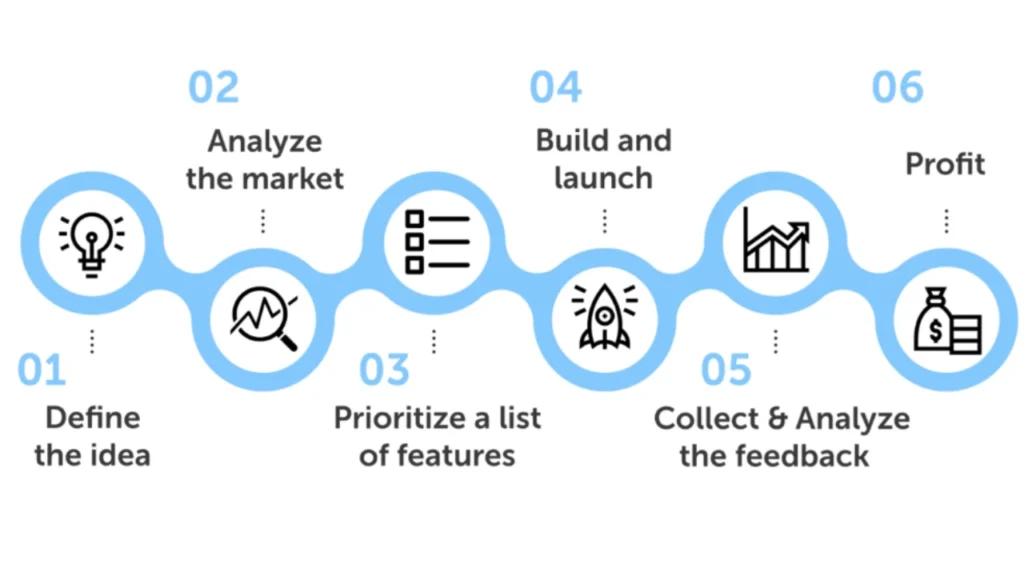
The MVP lifecycle framework is a step-by-step method of transforming an idea into a full-scale product with the help of a Minimum Viable Product. This framework is also systematic in values as far as validation, methodical improvement, and effective utilization of resources is concerned.
Idea Validation Stage
The initial unit of the MVP lifecycle is the idea validation stage. This is the level at which the objective is to gain insight into the issue, who the target users are, and assumptions are tested. Common activities include:
- Carrying out competitor and market research.
- Collection of user agonies and needs.
- Creating initial concepts or sketches.
- Measuring viability and possible ROI.
MVP Development Stage
The MVP development stage is when the team develops a working product with the bare minimum features in order to produce value to users. This is aimed at developing a barebones that could be tested as fast as possible. Key actions include:
- Determining MVP feature set on a priority basis.
- Creating the UX/UI of the bare bones product.
- Creation of the MVP based on Agile or Scrum.
- Performing internal testing to test basic functionality.
Market Testing Stage
The MVP is used in the market testing stage, where it is sent to a group of early adopters to obtain feedback and assumptions. Activities normally include:
Introducing the MVP to a small number of people.
- Gathering user feedback by surveying, interviewing, and analyzing.
- Attempting to assess involvement, retention, and satisfaction.
- Determining the areas of improvement and missing features.
Iteration and Learning Stage
The iteration and learning phase is the stage aimed at refining the MVP refinement relying on the obtained data. This phase is cyclic and focuses on constant improvement:
- Evaluation of feedback and usage rate.
- Focusing on change and improvements.
- Design, features, and functionality Iteration.
- Checking the updates with users in further versions of MVP.
Scaling Stage
The scaling stage comes after the MVP verified the nature of the product concept and shown that it was fit in the market. At this point, attention is paid to the product growth and the increase in the audience:
- With the value addition of features and functionality.
- Maximization of performance and infrastructure.
- Gaining more marketing and distribution channels.
- Getting ready to launch and grow the products fully.
Types of Minimum Viable Products
| Types of MVP | Description | Key Benefit |
| Concierge MVP | A handbook, a very individualized service provided to very early individuals without full automation. | Test demand and understand customer actions before scaling. |
| Wizard of Oz MVP | Shows up totally useful to individuals, but backend processes are done by hand by the team. | Confirm the product principle without full growth. |
| Landing Page MVP | A simple website or page offering the product concept to assess the individual rate of interest and accumulate e-mails. | Step market demand and accumulate early sign-ups. |
| Single-Feature MVP | Focuses on supplying only the most essential feature of an item. | Examination of core value recommendations before expanding functions. |
| Prototype-Based MVP | An interactive version or mockup showing item layout and functionality for responses. | Examination of use, style, and customer experience prior to coding. |
Step-by-Step MVP Development Process
Creating a Minimum Viable Product (MVP) entails a methodical method that balances speed, effectiveness, and individual recognition. The procedure makes sure that services can examine ideas swiftly while reducing threats and prices.
Step 1: Define the Problem and Target Audience
Begin by plainly identifying the trouble your product addresses and the customers it serves. This guarantees your MVP addresses a real need.
- Determine individual discomfort points
- Define user identities and demographics
- Clarify the problem statement and item objective
Step 2: Conduct Market and Competitor Research
Study the marketplace to verify need and determine chances.
- Examine competitor products and attributes
- Identify market gaps and unmet demands
- Evaluate possible need and market size
Step 3: Map the User Journey
Map the individual journey to produce a smooth and important experience with your MVP.
- Detail the individual circulation from discovery to usage
- Recognize essential touchpoints and difficulties
- Focus on steps that provide core value
Step 4: Prioritize Core Features
Emphasis only on the functions that solve the major trouble and provide value.
- Note all prospective attributes
- Ranking by importance and feasibility
- Select necessary functions for MVP launch
Step 5: Build the MVP
Create a useful MVP with only core features.
- Design a basic and intuitive UI/UX
- Use Agile or Scrum for step-by-step advancement
- Ensure fundamental functionality and functionality
Step 6: Launch and Collect Feedback
Launch the MVP to early customers and accumulate understanding to guide future renovations.
- Beta testing with minimal users
- Studies, interviews, and analytics
- Surveillance involvement and individual actions
Step 7: Iterate Using Build-Measure-Learn
Make use of the Build-Measure-Learn loophole to refine the item.
Develop: Execute renovations based upon feedback
Step: Track customer actions and metrics
Find out: Identify understandings to improve product-market fit
Repeat the cycle until the product is ready for scaling
Suggested: Step-by-Step Guide MVP Development for Startups
Successful Minimum Viable Product Examples
Examining effective MVP examples helps recognize how firms validate ideas promptly, reduce threats, and scale properly. Each MVP was developed to evaluate core functionality with very little financial investment before complete product growth.
Amazon:
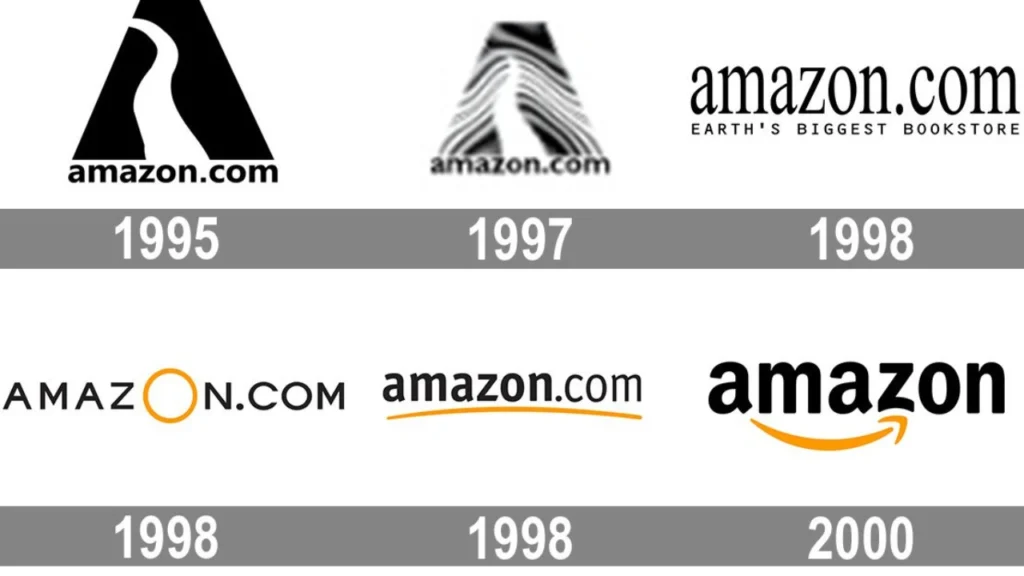
Amazon started as an easy online bookstore with a standard website to examine whether customers would acquire publications online. This MVP permitted Amazon to validate the shopping concept, recognize customer habits, and expand to a complete online marketplace.
Airbnb:
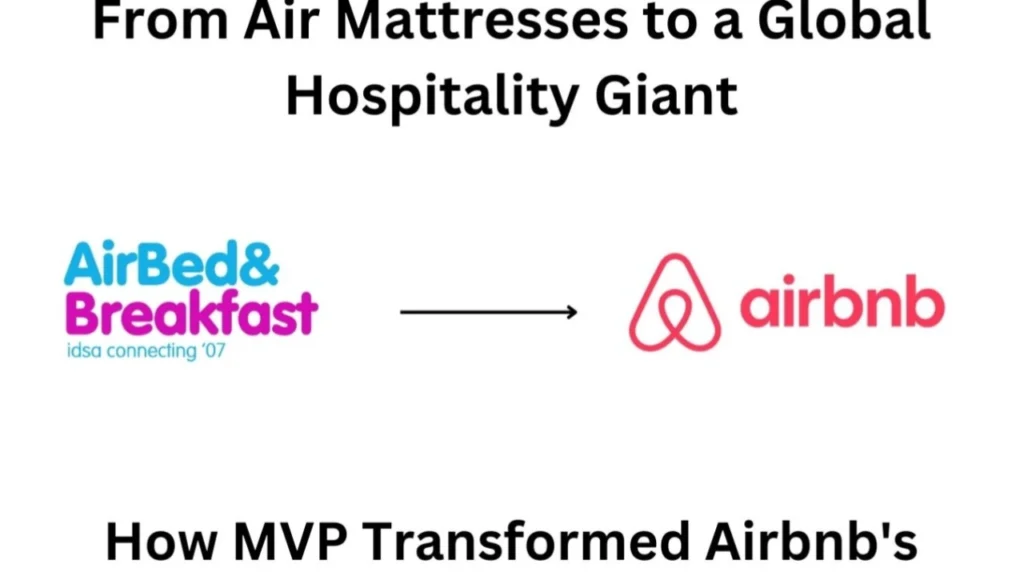
Airbnb’s MVP was a simple website providing a few areas in San Francisco. Founders personally satisfied visitors and hosts to understand requirements. This approach verified the home-sharing principle before establishing a total system.
Dropbox:
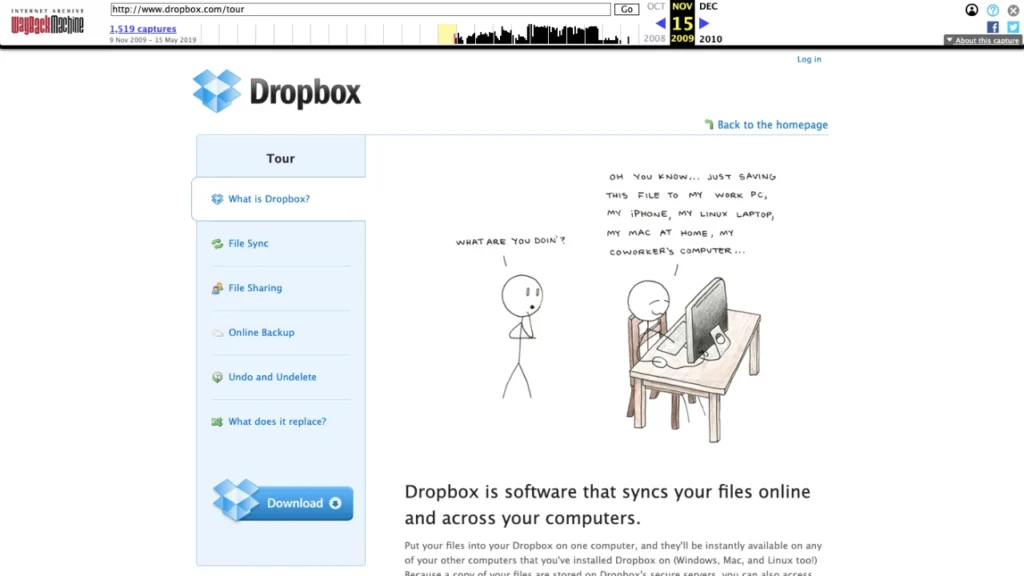
Dropbox began with an explainer video showing its file-syncing innovation, rather than building the complete software application. The video clip validated customer rate of interest and gathered sign-ups, verifying demand before complete advancement.
Facebook:
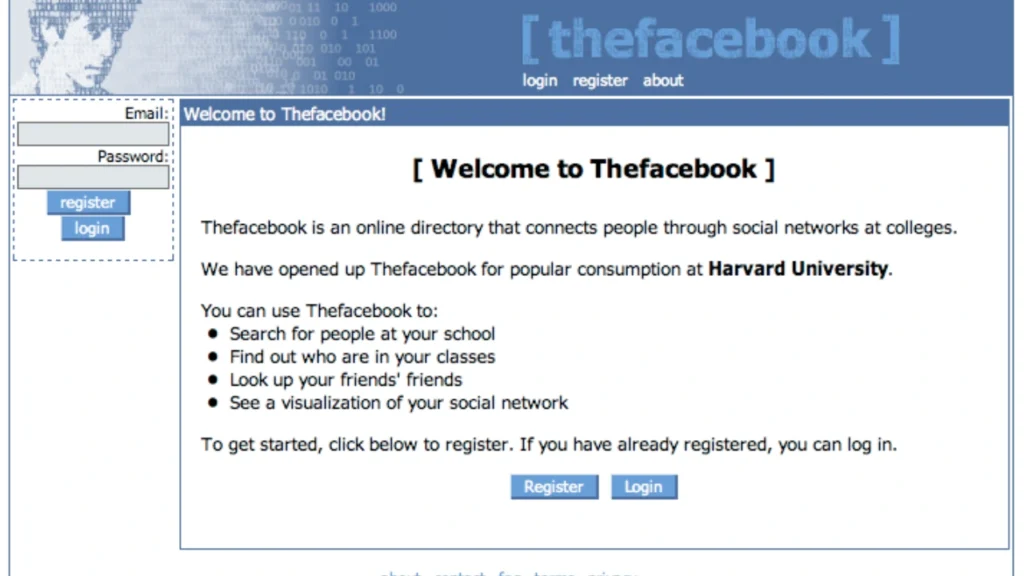
Facebook was released as Thefacebook.com, a basic social network restricted to Harvard students. This MVP evaluated individual involvement and social communications, permitting repetitive development to various other colleges and eventually the public.
Spotify:
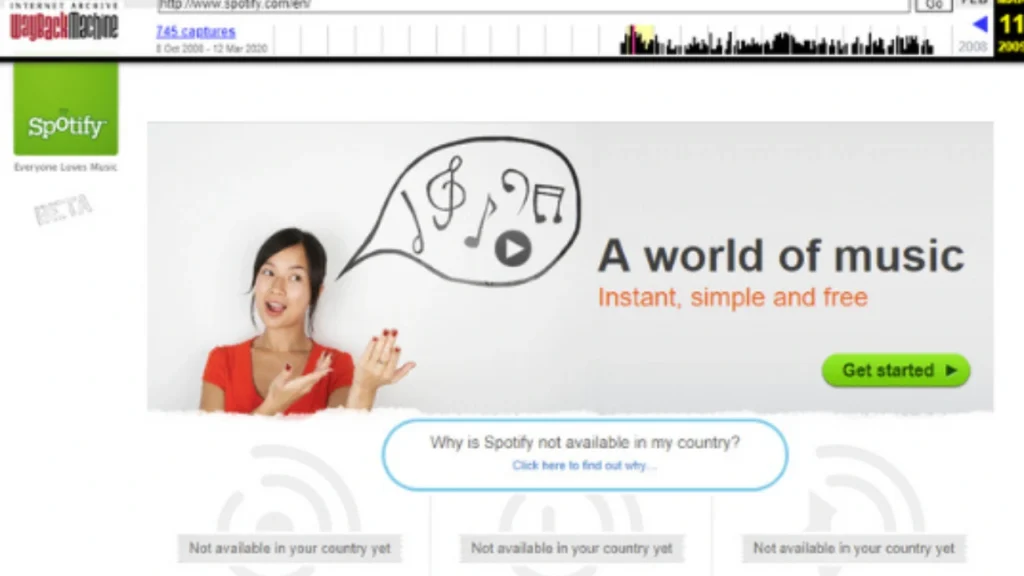
Spotify’s MVP was a minimal desktop application that permitted streaming music with fundamental functionality. Early individuals verified the core streaming concept, helping the company iterate on features before the public launch.
Scaling From MVP to Full Product
After confirming your MVP, scaling includes expanding attributes, enhancing performance, and preparing for bigger customer growth. Correct scaling ensures that the item can grow sustainably while meeting market demands.
Identifying Product-Market Fit
Product-market fit is attained when your product properly pleases the demands of your target market.
- Examine MVP comments and user engagement metrics
- Track retention, conversion rates, and user contentment
- Determine high-value features that drive growth
- Readjust product offerings or placements based on understandings
Roadmap Prioritization After MVP
Actions to prioritize your item roadmap:
- Provide all functions and improvements collected from MVP comments
- Rank things by company impact and technological expediency
- Strategy step-by-step releases using Agile or Scrum
- Set landmarks for scaling and customer purchase
Improving Scalability and Performance
Scaling an item calls for technical renovations to deal with larger user bases and greater traffic:
- Enhance backend design and data source efficiency
- Add automation to reduce manual procedures
- Ensure protection, reliability, and compliance for development
- Screen tons handling and application rate
Team and Process Evolution
As the product ranges, group framework, and processes must adapt:
- Broaden advancement, QA, and client support teams
- Execute structured workflows and job management devices
- Introduce continuous combination and shipment pipes
- Usage KPIs and metrics-driven decision-making
Discover How Your MVP Can Validate Ideas Fast and Drive Growth. Book a 30-Minute Call
Conclusion: Turning Your MVP Into a Scalable Product
The creation of an MVP is merely the main initial measure of a successful product adventure. Once you have confirmed your concept and received the feedback of users, it is time to move to the next stage, which is to iterate, improve and scale.
The understanding of usage among the very early adopters to concentrate on functions, improve customer experience, and expand market reach. An effective MVP will ensure that the full scale product will align with the real user needs and reduce risks and growth costs.
Frequently Asked Questions
What Is MVP Development?
MVP growth is the process of building a minimal version of an item with core functions to examine an idea, verify market need, and gather early user feedback prior to major advancement.
What Is a Minimum Viable Product in Agile?
MVP in Agile is an operational product that is developed through iterative means and has the basic features. Quick releases, ongoing feedback and refinement of the product are all possible with Agile MVPs and sprints.
How Long Should MVP Development Take?
MVP development typically takes 4 to 12 weeks, depending on complexity, features prioritized, and team size. The focus is on speed and efficiency, not a fully-featured product.
Can You Have Multiple MVPs?
Yes. Businesses can create multiple MVPs for different features, user segments, or markets to test various hypotheses before scaling the product.
What Percentage of Features Should an MVP Include?
An MVP should include only 20 to 40% of the total planned features, focusing on those that deliver core value and validate the product concept.
Is MVP the Same as a Beta Version?
No. An MVP is for validating the idea with minimal features, while a beta version is a near-complete product released for testing before full launch. MVP precedes beta in the development lifecycle.