
Products fail, although not because of a lack of might. It lacks planning, vision, and insight.
Poor market fit and misalignment.Turn most daring dreams into failures.
However, most suppose that failure is a result of innovation or budget deficit. As a matter of fact, well-invested, technically superior, and highly hyped products fail.
The cause is not often based on one weakness; it is often based on a mismatch in the engineering, strategy, market positioning, and leadership.
These underlying causes are what founders, product managers, and business leaders need to understand in order to develop solutions that can be built in a scalable and sustainable manner.
What is Product Failure?
Product failure is when a product fails to reach the desired success, adoption, revenue, and strategic goals in the market. Failing is not necessarily closing; it can also be the inadequacy of performance, loss of competitiveness, or scaling failure.
Types of Product Failure
1. Market Failure
This is when a product fails to address a substantial problem or fulfill the actual customer need. However innovative and well-designed a product is, without the necessity of the market, it will fail.
Key Indicators:
- Poor adoption despite advertising.
- Lack of customer interest tests.
- According to surveys, customers do not see the problem as something urgent.
2. Technical Failure
Technical failures occur when a product is unreliable, has an inability to scale, or fails to perform to the expectations of the user. This is mainly as a result of ineffective engineering, technical debt, or a lack of testing.
Key Indicators:
- Constant bugging and system failures.
- Poor performance or downtime.
- Bad user reviews were based on usability or reliability.
3. Strategic Failure
A failure of strategies happens when there is a mispositioning of the product, where there is a mismatch of the target market or the pricing of the product. Customers cannot adopt a product even if it is perfect, but the strategy is bad.
Key Indicators:
- Marketing campaigns and poor sales.
- Lack of product-adjustment to the target audience’s needs.
- You are being outperformed by the competitors with superior positioning.
4. Execution Failure
Causes of execution failure have to do with operational problems- improper planning of launch, ineffective user onboarding, or improperly managed processes. A good product could be a strong conceptually, but when handled poorly during the rollout, it does not achieve its potential.
Key Indicators:
- Large turnover post-adoption.
- Weak adoption indicators in spite of demand.
- Teams are either late in delivering or not delivering promised features.
The majority of product failures are a conglomerate of these types as opposed to an isolated cause. As an example, a technically feasible product can fail due to a bad market validation (market failure) and bad onboarding (execution failure).
The knowledge of all four is important to allow founders and product managers to avoid failure before it occurs.
Learn from product failures and build solutions that succeed. Explore EXRWebflow’s Services to see how we can help you bring your product to market.
Why Great Products Fail
1. Engineering Failures
Strong technology alone does not assure success. Usual engineering-related causes consist of:
- Over-engineering before recognition: Structure complicated infrastructure before confirming the need.
- Technical debt accumulation: Hurried development brings about long-term instability.
- Scalability miscalculations: Solution unable to manage growth.
- Disregarding user feedback loopholes: Prioritizing features over functionality.
Engineering groups often concentrate on technological excellence while neglecting customer habits and market realities.
2. Strategic Failures
Even practical audio items stop working as a result of a flawed approach.
- Lack of product-market fit: The solution does not align with user pain points.
- Weak value proposition: Consumers do not clearly comprehend the benefit.
- Poor go-to-market method: Ineffective launch timing or distribution.
- Incorrect pricing design: Pricing does not match the regarded value.
Without calculated quality, cutting-edge products also battle to obtain a grip.
3. Leadership Failures
Leadership choices greatly affect product results.
- Vision drift: Constant reversals perplex teams.
- Delayed decision-making: Sluggish feedback to market signals.
- Internal misalignment: Engineering, advertising, and item teams working in silos.
- Ego-driven roadmaps: Prioritizing assumptions over validated discovery.
Management alignment is usually the concealed factor of product success or failure.
Case Studies of Major Product Failures
1. Google Stadia
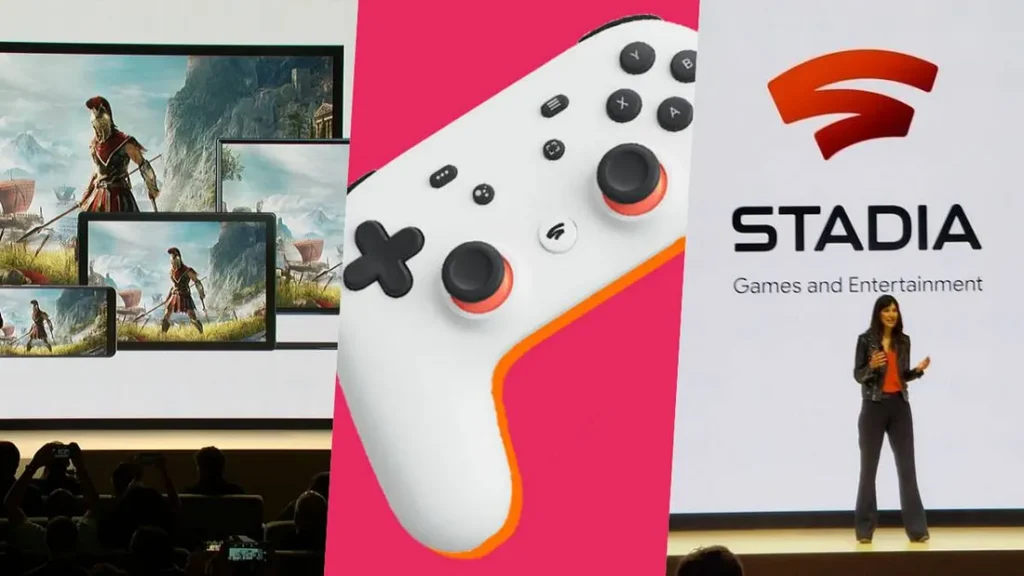
Google Stadia was released as a cloud-based gaming system promising to let individuals play high-grade games on any kind of device, PC, TV, or mobile phone without the need for a physical console. The vision aspired: remove costly hardware and make pc gaming accessible anywhere.
Problem:
While the idea was cutting-edge, Stadia assured a seamless, console-free video gaming experience. The truth fell short: latency concerns, irregular performance, and limited compatibility aggravated early adopters.
Root Causes:
- Infrastructure Limitations: The cloud web servers might not regularly supply the low-latency experience needed for affordable video gaming. Gamers experienced lag, which is crucial in busy games.
- Minimal Game Ecological Community: A couple of AAA titles and prominent franchise businesses were offered at launch, so gamers had little incentive to change from developed systems like PlayStation or Xbox.
- Uncertain Positioning: Google marketed Stadia as both an informal and hardcore pc gaming solution, but did not plainly define the target audience or connect the product’s advantages over consoles.
Lesson:
- Ecological community strategy issues: For platform-based products, having the appropriate collaborations, material schedule, and a clear value proposition is crucial.
- Facilities readiness is vital: Also, ingenious cloud options fail if modern technology can not deliver a regular user experience.
- Advertising and marketing quality: Users should promptly understand why the item is better or different.
2. Juicero
Juicero was a startup that sold an expensive Wi-Fi-connected juicing maker along with pre-packaged juice packs. The idea was to supply fresh, convenient juice at home with very little effort.
Problem:
Juicero’s equipment resolved a very small aggravation: pressing pre-packaged juice packs. It guaranteed modern benefits yet did not deal with a pressing or widespread consumer trouble.

Root Causes:
- Over-Engineered Remedy: The hardware was unnecessarily complex, pricey, and depended on exclusive packs, making the item less adaptable and cost-prohibitive.
- Market Mistake: Consumers could attain nearly the very same outcome by manually squeezing the packs or purchasing ready-to-drink juice.
- Pricing Concern: The high expense of the machine ($ 400+) made it unattainable to the majority of potential purchasers.
Lesson:
- Validate trouble intensity: Even a practically excellent item fails if the trouble is minor.
- Prevent over- engineering: Advanced remedies must match the actual worth regarded by the client.
- Concentrate on market need: Prices, benefits, and ease-of-use must line up with consumer habits.
Read more: Why is EXRWebflow the Best AI Partner for Enterprises?
The 4P Product Failure Framework
The 4P Framework is a methodical approach to analyzing why products fall short. It breaks down failure into 4 interconnected dimensions: Problem, Positioning, Product, and People. The majority of product failures take place when two or more of these locations are weak or misaligned.
1. Problem
A product must resolve a real, significant issue for its target audience. If the discomfort factor is small or the option doesn’t address it effectively, even a properly designed product will stop working.
2. Positioning
Even if a product solves a real problem, it needs to be plainly distinguished and placed in the psychology of prospective consumers. Poor placement results in confusion, weak adoption, and failure to record market share.
3. Product
The product itself must be practically audio, scalable, and easy to use. Implementation failures usually come from over-engineering, technological debt, or overlooking use and reliability.I.
4. People
Leadership and cross-functional positioning are vital. Misaligned teams or unclear vision can hinder even well-conceived items. Leadership choices affect approach, execution, and society, influencing every phase of the product lifecycle.
| Dimension | Key Focus | Common Failure | Preventive Action |
| Problem | Actual consumer pain | Unvalidated or minor issue | Marketing research, MVP, interviews |
| Positioning | Clear market differentiation | Complex value proposition | Specify one-of-a-kind value, target audience, and affordable analysis |
| Product | Dependability and scalability | Poor UX, technical financial debt, performance problems | Examination at scale, concentrate on functionality, optimize framework |
| People | Leadership and positioning | Misaligned teams, sluggish decisions | Clear vision, cross-functional positioning, metrics-driven management |
Early Warning Signs of Product Failure
Leaders must keep track of measurable signs:
- Rising churn price.
- Declining client engagement.
- Consumer procurement expense (CAC) surpassing lifetime worth (LTV).
- Reduced function adoption.
- Unfavorable Net Marketer Rating (NPS).
- Stakeholder imbalance.
These metrics commonly signal deeper architectural problems in product approach or execution.
How to Prevent Product Failure
Validate Before Scaling
Assume little, but test your assumptions with Minimum Viable Product (MVP), studies and user meetings first before spending big. This will assist in ensuring that your solution to someone is solving a real problem and reducing the risk of spending resources on something the market does not require.
Prioritize Product-Market Fit
Make sure that what you are selling solves a concrete, immediate issue of your target audience. Good product-market fit enhances the fostering, reduces churn rate, and provides the base of long-term growth.
Align Cross-Functional Teams
Stay focused on product, engineering, advertising, marketing, and management groups. Misalignment generally causes delays, opposing decisions, and a diluted value of items.
Use Data-Driven Decision Making
Monitor important customer retention, activation price, and interaction metrics to have an eye on item performance. Problem-solving decisions grounded in real data can identify issues at an early stage and facilitate the repeat of the improvement.
Maintain Strategic Focus
Eliminate unnecessary bloat of functions or complexity that is not truly important. Focus on having the fundamental issues fixed correctly, testing the product, and extending it progressively to maintain quality and functionality.
Have questions about your product? Schedule a call with our Product Expertsand let’s discuss how to make it a success.
Key Takeaways
- Great products fail due to misalignment, not lack of innovation
Also, cutting-edge ideas can fall short if groups, methods, or market understanding are not aligned. - Engineering strength cannot compensate for a weak strategy
Technical excellence alone can not make up for poor item placement or company choices. - Leadership clarity directly impacts product sustainability
Clear vision, decision-making, and group placement are critical to maintain a product on course. - Market validation should precede large-scale investment
Verify that there is a genuine need prior to spending heavily on advancement or marketing. - Early metrics can reveal potential failure before collapse
Keeping track of individual fostering, churn, and involvement aids in identifying problems early, enabling restorative action.
Frequently Asked Questions
What is the main cause of product failure?
Absence of product-market fit incorporated with strategic and leadership misalignment.
Can technically strong products fail?
Yes. Engineering quality can not replace market demand or effective placement.
Is product failure more strategic or operational?
Most failures are calculated at their core yet show up operationally gradually.
How can companies recover from product failure?
By reassessing market fit, refining positioning, and straightening leadership choices with quantifiable information.