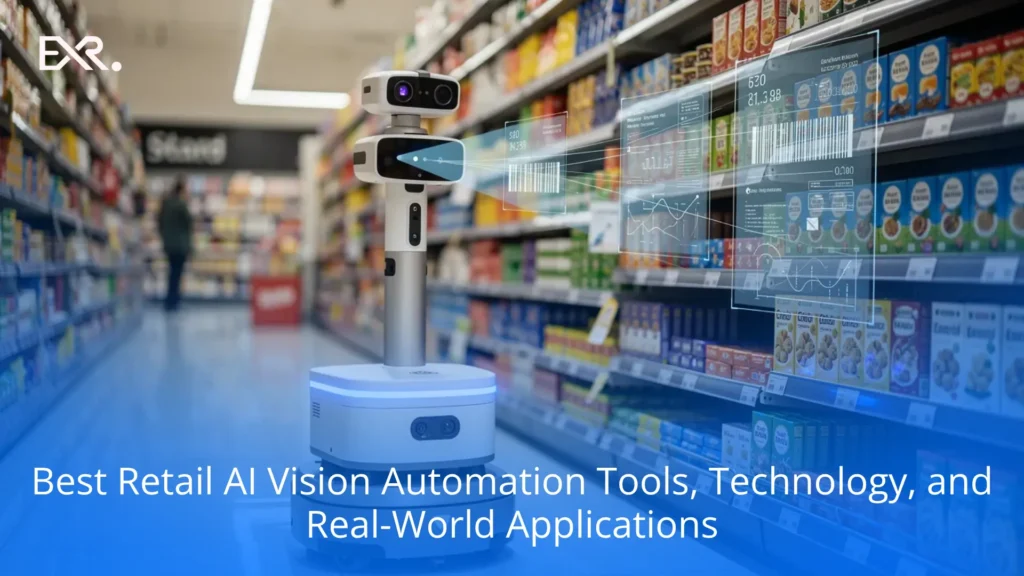

Artificial intelligence is causing a significant change in the retail industry, with retail AI vision automation being one of the most effective changes. Using computer vision, machine learning, and smart retailing technologies, companies can automate processes, improve the customer experience, and discover real-time information.
The world today is putting vast pressure on retailers to enhance efficiency, cut down operational expenses and offer smooth shopping experiences. The AI vision systems can solve these issues because they provide the ability to automate solutions in the inventory management, checkout systems, customer analytics and loss prevention.
With the rising digital transformation, the use of AI retail automation solutions is becoming mandatory instead of discretionary.
What is Retail AI Vision Automation?
Retail AI vision automation Retail AI vision automation is automated computer vision, the application of AI-based computer vision models to analyze visual data, which is obtained by cameras and sensors in retail settings.
The retailers can:
- Automatically follow inventory amounts.
- Measure the in-store behavior of customers.
- Discover product placement problems.
- Determine suspicious activity.
- facilitate a checkout-free experience.
In a very basic manner, it enables retail stores to work with minimal human effort and achieve maximum accuracy and efficiency.
Looking to implement retail AI vision automation? Hire our AI experts to integrate cutting-edge solutions seamlessly into your store operations
How AI Vision Works in Retail (Technology Breakdown)
It is very important to be informed about the technology underlying the solutions.
1. Computer Vision in Retail
Computer vision allows machines to analyze and decode visual information. It identifies products, shelves and customers as the basis of the retail vision AI systems.
2. Machine Learning and Deep Learning Models
These models are trained on large data sets in order to identify patterns, behaviors, and anomalies. In the long run, they become more precise in:
- Product recognition
- Customer tracking
- Behavior analysis
3. Edge AI vs Cloud AI
- Edge AI: Run data analysis locally and can make decisions faster and in real-time.
- Cloud AI: Scalability and analytics.
A hybrid strategy is commonly applied in the best achievement of AI-driven retailing settings.
4. IoT and Smart Camera Integration
Contemporary retail outlets install cameras powered by IoT, which constantly capture and send data, and this makes it possible to automate and make predictions.
Key Features of Retail AI Vision Automation
The features of the retail AI vision systems are very numerous and increase the efficiency of operations:
Real-Time Monitoring: Real-time access to store operations.
Object Detection and Recognition: Accurate product recognition.
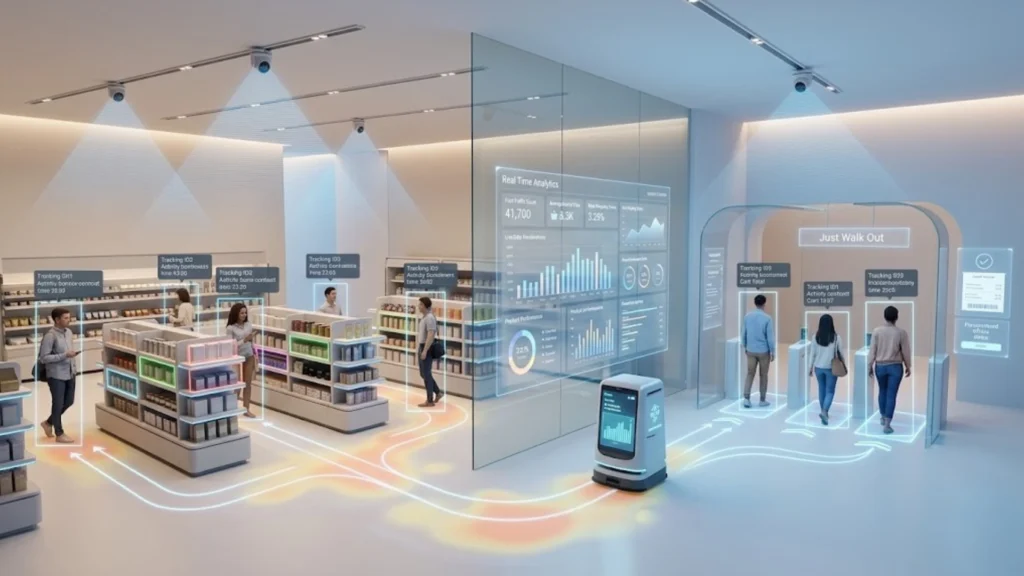
Customer Behavior Analytics: Monitors movement, dwell time, and engagement.
Automated Inventory Tracking: Identifies inventory status and shelf holes.
Loss Prevention Systems: Detects theft and suspicious activity.
Heatmaps and Foot Traffic Analysis: Store layout optimization.
The capabilities render AI retail analytics a very useful platform for contemporary business.
Top Retail AI Vision Automation Tools
The choice of the tools is the key to success in achieving desired outcomes. The following are the best solutions that are common in the industry:
1. Amazon Just Walk Out
This solution is a first in cashierless shopping, whereby shoppers can select products and walk away without paying.
- Best For: Large retail chains
- Key Feature: Smooth shopping process
- Use Case: Autonomous stores
2. Standard AI
Differentiates current stores into independent retail settings with no significant changes in infrastructure.
- Ideal: Medium and large stores.
- Significant Point: Simple integration with existing store configurations.
3. Trax Retail
Concentrates on monitoring of shelves and in-store implementation through image recognition.
- Most suitable in: Supermarket chains and FMCG.
- Key Feature: Shelf real-time analytics.
4. Sensei AI
Offers autonomous retail solutions end-to-end and customer-centric approach.
- Best For: Smart retail stores
- Biggest characteristic: Smooth checkout systems.
5. AiFi
Provides checkout and store automation based on AI.
- Best Suited: Small and large retailers.
- Key Feature: Adaptable deployment designs
Real-World Applications of Retail AI Vision Automation
1. Cashier-Less Stores
The fully automated checkout systems will be possible with the help of AI vision that will remove long lines and increase efficiency.
2. Smart Shelf Monitoring
Retailers are able to see the availability and location of products in real time and cut down on the out-of-stock problems.
3. Loss Prevention and Security
AI identifies abnormal behavioral patterns, which minimize theft and shrinkage.
4. Customer Behavior Analytics
Retailers can have insights into:
- Customer movement
- Product interaction
- Buying patterns
This helps in improved decision-making and promotional approach.
5. Queue Management Systems
AI forecasts optimal hours and assists in optimizing the workforce to enhance customer satisfaction.
Have questions about which AI vision solution is right for your business? Contact us now for personalized advice and a step-by-step roadmap.
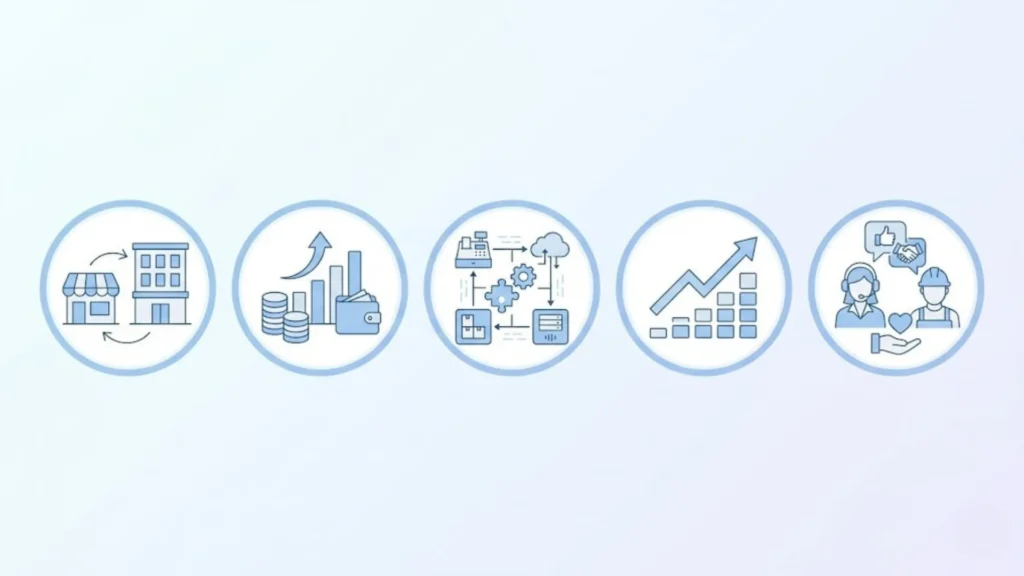
Benefits of Retail AI Vision Automation
1. Operational Cost Reduction
Automation lowers the use of manual labor and errors.
2. Improved Efficiency
Inventory tracking and checkout are some of the processes that are made faster and more accurate.
3. Enhanced Customer Experience
Customers enjoy:
- Faster service
- Personalized shopping
- Seamless checkout
4. Data-Driven Decision Making
Retailers will have opportunities to use AI systems to enhance the performance of stores.
5. Competitive Advantage
Delegates of AI in retail automation technologies are early adopters, which means they have a major advantage in the market.
Challenges and Limitations
Although it has many benefits, many challenges can be identified:
1. Privacy and Data Security Concerns
Customers can be concerned about the surveillance and data usage.
2. High Initial Investment
The installation of AI vision systems is very expensive.
3. Accuracy and Training Issues
Artificial intelligence requires continuous learning in order to ensure high precision.
4. Integration Complexity
The integration with legacy systems may be a complicated task.
Latest Trends in Retail AI Vision Automation (2026)
The retail environment is still in a state of flux with new innovations:
Edge AI Adoption
Edge computing is being utilized by retailers in a faster decision-making process.
Growth of Autonomous Stores
Cashless shops are spreading all over the world.
AI-Powered Personalization
AI is applied to provide personalized advice and experience.
Advanced Retail Analytics
Live dashboards are used to offer insights that can be acted upon to make improved decisions.
Suggested: How Computer Vision Improves Operational Efficiency in Enterprise
How to Choose the Right Retail AI Vision Solution
The process of selecting a suitable platform is based on several aspects:
Business Size: Small vs enterprise level requirements.
Budget: Track the initial and running expenses.
Integration Capabilities: Be compatible with existing systems.
Scalability: The capacity to grow with business expansion.
Vendor Support: Good updates and maintenance.
Future of Retail AI Vision Automation
The future of retailing is intelligent automation. The AI vision technology will be developed further, to allow:
- Retail ecosystems that are completely independent.
- Intelligent supply chain inventory management.
- Hyper-personalized shop experiences.
- Fluent omnichannel communication.
The retailers that embrace such technologies at an early stage will be in a better position to achieve success in the long-run.
Ready to transform your retail operations with AI vision automation? Schedule a 30-minute call with our experts today and discover the best solution for your business.
Conclusion
The retail industry is changing through the retail AI vision automation that is making its operations smarter and less expensive, as well as making its customers’ experience better. With the growing rivalry, it is critical to embrace AI-based retail solutions in order to be ahead.
Companies investing in retail computer vision technology at this point will be in a better position to respond to the upcoming needs and provide unmatched shopping experiences.
Frequently Asked Questions
What is retail AI vision automation?
It is the use of AI and computer vision to automate retail operations using visual data.
How does AI vision improve retail efficiency?
It automates processes such as inventory tracking, checkout, and customer analytics.
Is retail AI vision suitable for small businesses?
Yes, scalable solutions are available for businesses of all sizes.
What are the best tools for retail AI automation?
Popular tools include Amazon Just Walk Out, Standard AI, Trax Retail, Sensei AI, and AiFi.